Know your secondary controls
EWP Rescue Refresher — a short, practical look at the recovery sequence every operator should carry in their back pocket.
EWP Rescue Refresher — a short, practical look at the recovery sequence every operator should carry in their back pocket.
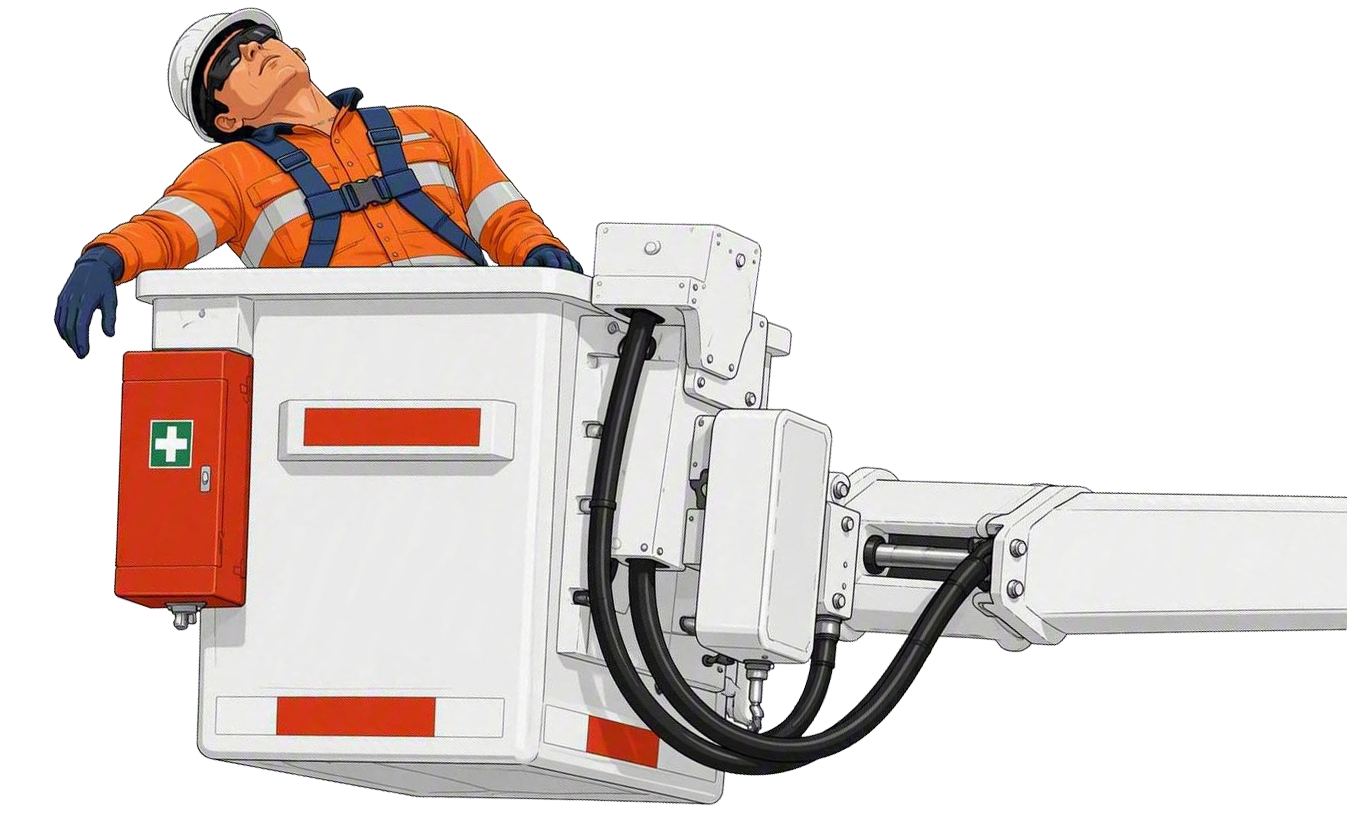
During a planned overhead outage, an EWP operator became stranded approximately 5–6 metres above the ground when normal recovery controls failed to operate as intended. Although the EWP's emergency recovery systems were available, the crew were unable to successfully use them to lower the basket.
The worker ultimately returned safely to the ground using a basket escape system. While effective when required, basket escape is a higher-risk recovery option that exposes workers to additional hazards and requires rescue equipment to be removed from service after use.
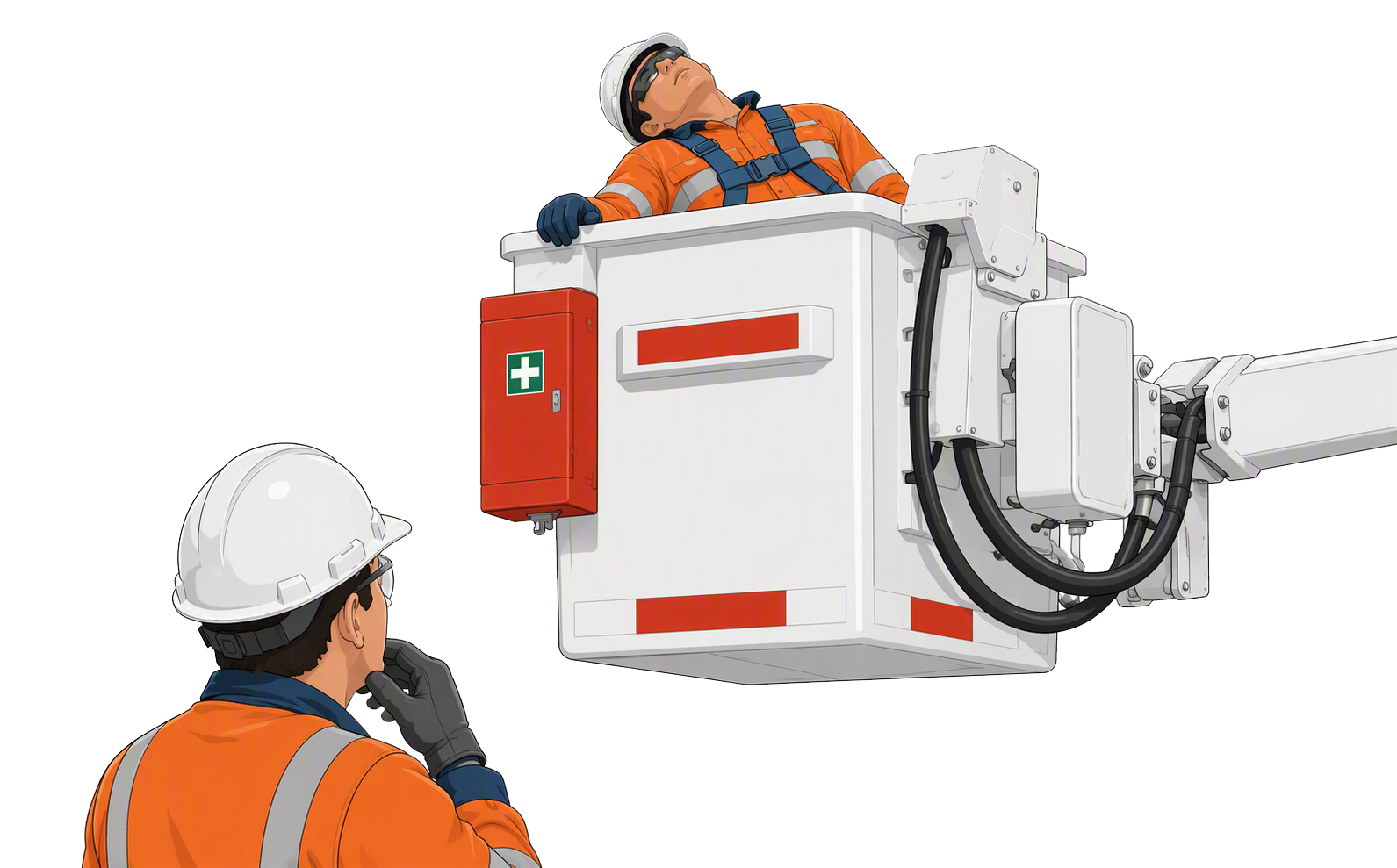
EWP faults, control failures and rescue situations can occur without warning. In our work environment, they may also occur while operating near electrical infrastructure, where delays, uncertainty or incorrect actions can increase risk.
Understanding your EWP's secondary controls, emergency recovery systems and recovery sequence can help you respond confidently and safely. This refresher will help you recognise the available recovery options and choose the safest method before escalation.
All EWPs have similar features, but the exact location or operation may vary slightly. It's important to be familiar with these features on the EWPs you work with — this module covers the general concepts and ties them to real EWPs where appropriate.
Do not skip ahead to bleed-down functions unless other options have failed.
Placeholder photography for each step — these will be swapped for dedicated imagery.
Bleed-down releases hydraulic pressure to lower the basket in an uncontrolled-feeling way compared to the earlier steps — it's the last resort before escalation, not a shortcut. Working through observer → base → emergency/DC pump → manual pump first gives you the most control and the best chance of a clean recovery, and keeps bleed-down and escalation in reserve for when everything else has genuinely failed.
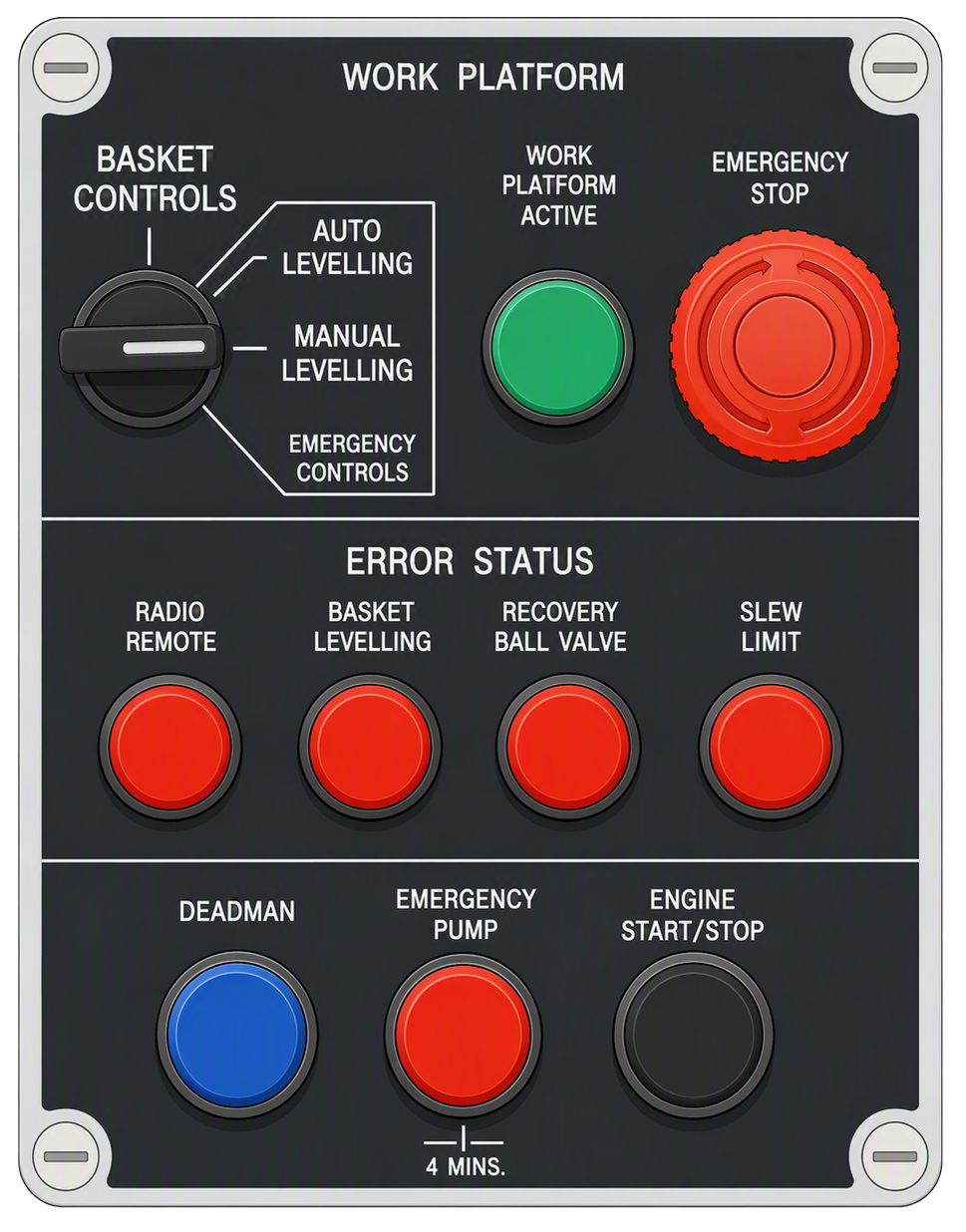
Use the base controls when basket and observer controls cannot be operated.
Appropriate safety controls should be implemented before accessing base controls. If the EWP is within HV SADs, the network is to be isolated, proven de-energised, earthed and short circuited before accessing the EWP.
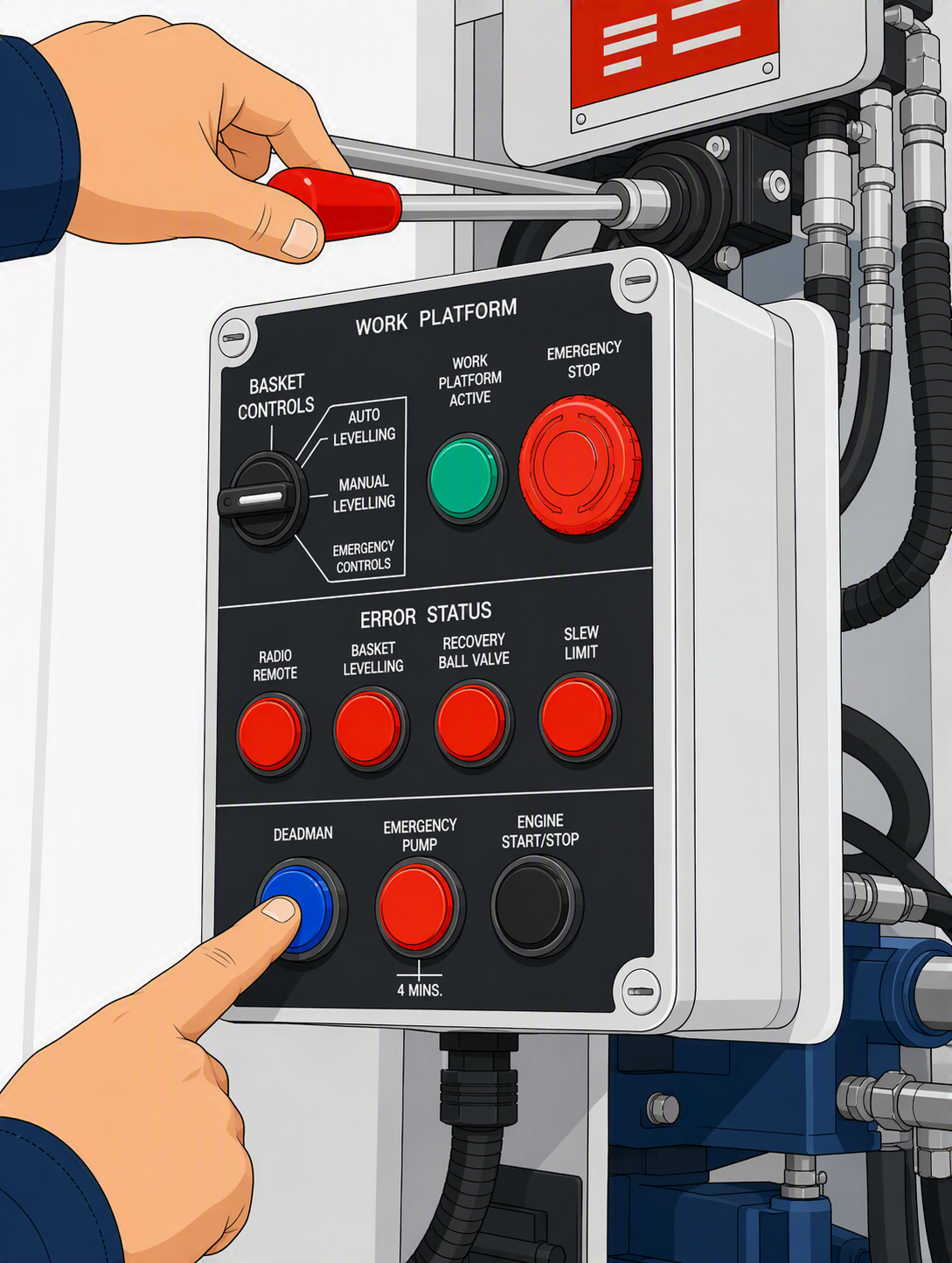
Use the emergency/DC pump when normal machine power is unavailable. It's typically operated together with the base controls.
Use the manual pump when powered recovery systems are unavailable. Hydraulic pressure is created by manual pumping, allowing selected machine movements — locations and operation vary between machines, so follow machine-specific instructions.
If manual pump functions fail to operate, and/or it's unsafe to lower the basket in the current position, the manual slew function may still be functional. That can let you position the bucket in a safe location, ready for bleed-down — or to escalate to manual descent if that's the safer path. Depending on the situation, hydraulic pressure may or may not need to be primed.
The bleed-down system is the last recovery option before escalation.
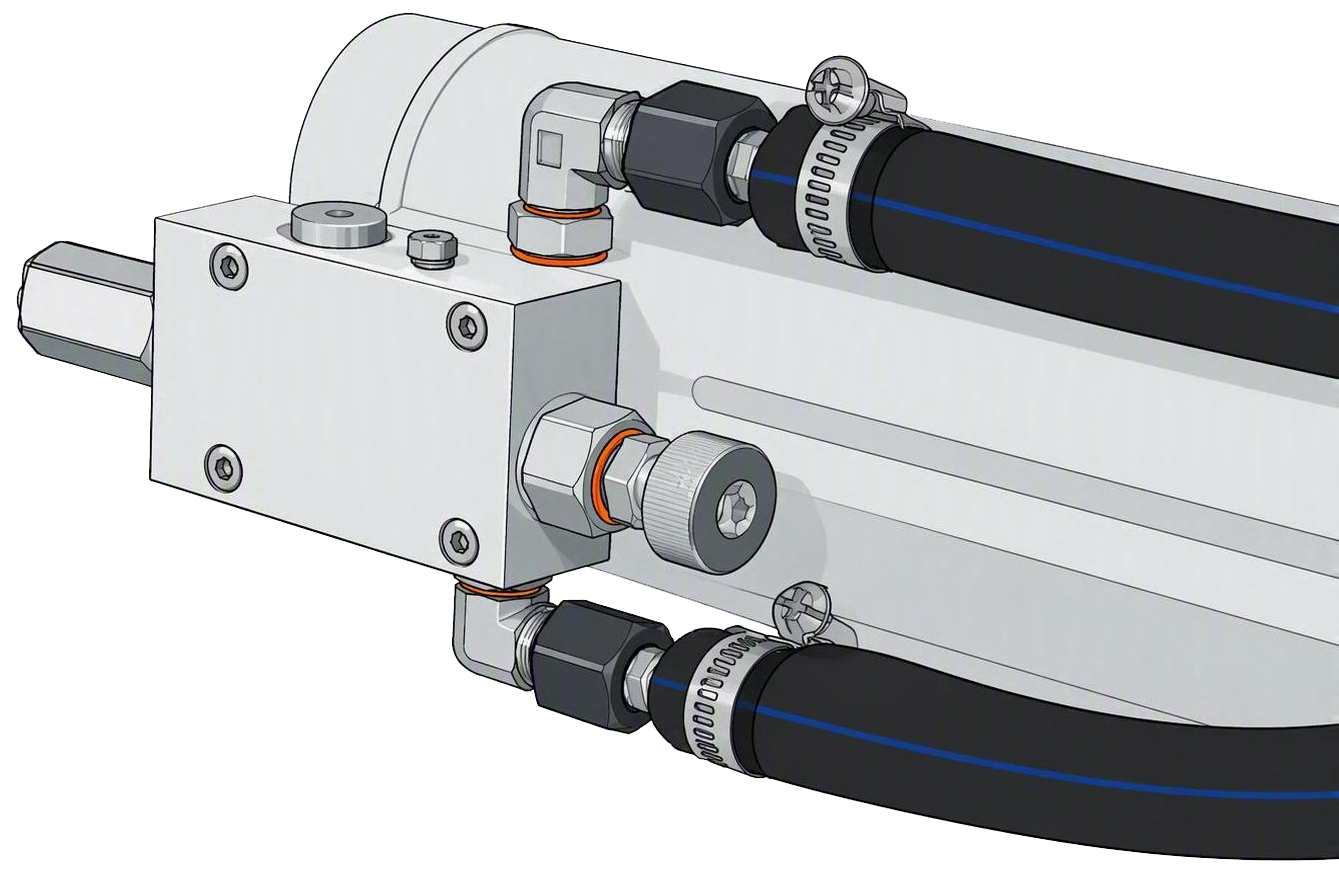
Bleed-down valves are often located on the EWP arms — watch for pinch points when using these.
An operator becomes unresponsive while elevated.
Use the base controls to lower the basket safely.
Success: recovery completed using base controls, basket lowered safely and tilted in the green zone.
Rescue your colleague.
Interactive EWP simulation — use the on-screen controls to complete the recovery.
An operator becomes stranded in an EWP.
Use the manual pump and bleed-down system.
Rescue your colleague.
Interactive EWP simulation — use the manual pump and bleed-down system to complete the recovery.
If the worker(s) is conscious and in immediate danger, instruct them to release CDD and escape as soon as possible. An example of immediate danger could be smoke escaping from the boom, where a manual pump rescue may be too slow.
Stop recovery attempts, reassess, and maintain control of the worksite — keep personnel clear of hazards and stay in communication with the person in the basket where possible. Then contact supervision and provide:
Request specialist assistance if required, follow local emergency response arrangements, and don't improvise rescue methods that haven't been approved.
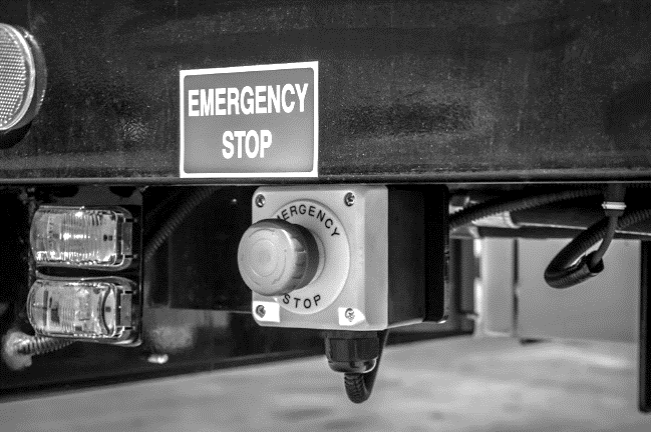
Remember: stop, maintain site control, and keep communication with the stranded worker where possible.
Escalate early rather than continuing unsuccessful recovery attempts — seek assistance from competent persons, and don't improvise.
No. If normal recovery methods can't be completed safely, the priority is to maintain control of the situation and get additional support. The goal is a safe and controlled recovery — not the fastest one.
Remember the recovery sequence
Every EWP is different. Before operating one, know:
If you're not sure, stop and seek assistance.
Four quick ratings and anything else you want to tell us. 1 star is very dissatisfied, 5 stars is very satisfied.
The learning was of value to me.
The content and simulation functioned without issues.
The simulation helped me understand better than a manual and pictures could.
I am confident I can put the learning into practice.